
Around the World: Russian Aggression in Europe, Capitulation at Home

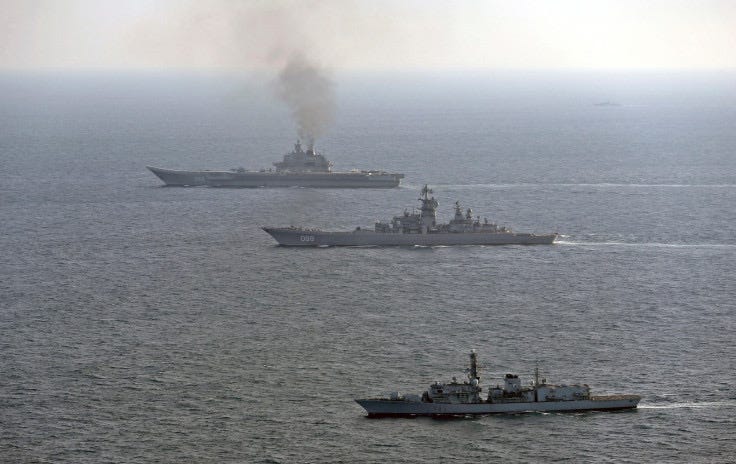
Russian naval provocations near the UK escalated this week, with the Royal Navy forced to shadow the Russian warship Stoikiy and its tanker Yelnya as they transited the Dover Strait and moved west through the English Channel. The UK Ministry of Defence says Russian naval activity judged to be threatening UK waters is up roughly 30 percent over the past two years, including in this instance the deployment of the spy ship Yantar, which is designed to map and, in a crisis, sabotage critical undersea infrastructure. In a speech on the growing threat, UK Defence Secretary John Healey put it plainly: “My message to Russia and to President Putin is this: we see you. We know what you are doing. And if the Yantar travels south this week, we are ready.” Russia is not just menacing Ukraine’s front lines; it is probing NATO’s perimeter, from the High North down into the Channel, testing how far it can push before it meets real resistance.
Against that backdrop, the Trump administration is pushing a 28-point “peace plan” that would lock in many of Moscow’s gains. The draft was shaped primarily by Secretary of State Marco Rubio and Trump’s special envoy Steve Witkoff, working closely with Kirill Dmitriev on the Russian side. European and U.S. reporting is consistent on the basics: the plan was initially crafted between Washington and Moscow and then dropped on Kyiv with a Thanksgiving deadline, without Ukraine at the table in the early stages. It would force Ukraine to give up all of the Donbas still under its control, recognize Russian control over Crimea, slash the size of its armed forces, and permanently abandon NATO membership, in exchange for vague security language and U.S.-led reconstruction funded partly by frozen Russian assets. At the Halifax International Security Forum, multiple senators from both parties said Rubio himself had described the package as essentially a “Russian wish list,” even as he publicly insists it is a balanced U.S. initiative. Ukrainian officials and many European leaders are alarmed that the document asking Ukraine to trade land and hard power for paper guarantees was drafted largely over their heads, then delivered as an ultimatum with the threat of reduced U.S. support if they refuse.
Critics’ core fear is simple: Russia will pocket the concessions, sign whatever it needs to sign, and then treat the new lines not as a peace settlement but as a staging ground. The draft would hand Moscow full control over the Donbas and secure its hold on Crimea while offering only weak, non-NATO security language that doesn’t actually obligate the U.S. or Europe to intervene if Russia breaks the deal. Given Moscow’s record of shredding previous agreements and using every ceasefire to rearm, there is a very real concern that consolidating Russian control in the east now is how you lose Kyiv later. From that perspective, Russian ships menacing cables off Scotland and warships threading the English Channel are not separate from a “peace” plan that rewards invasion; they are different fronts in the same campaign. When Washington tries to sell Europe on a settlement that Ukrainian lawmakers call capitulation at the very moment Russian forces are pushing harder against NATO’s doorstep, it doesn’t deter aggression — it teaches that, if you push long enough and hard enough, the West will eventually call your gains “peace” and move on.
In solidarity,
Olya Makarova
No Dem Left Behind
Most of the reports suggest that the “peace plan” was written by the Russians and simply translated into English without much change. If so, this is even more shameful than if Little Marco had written it himself. It gives the Russians everything they want and leaves the stage set for even more aggression by Moscow. I can’t even imagine what angst this is generating in, for instance, Poland. What is needed is a continued enhancement of the Ukrainian military and their induction into NATO. Lots of luck with this bozo in the White House. Despite protests, he is clearly in Putin’s pocket and will do whatever the Russians want, so long as it leads to profits in his pockets.